
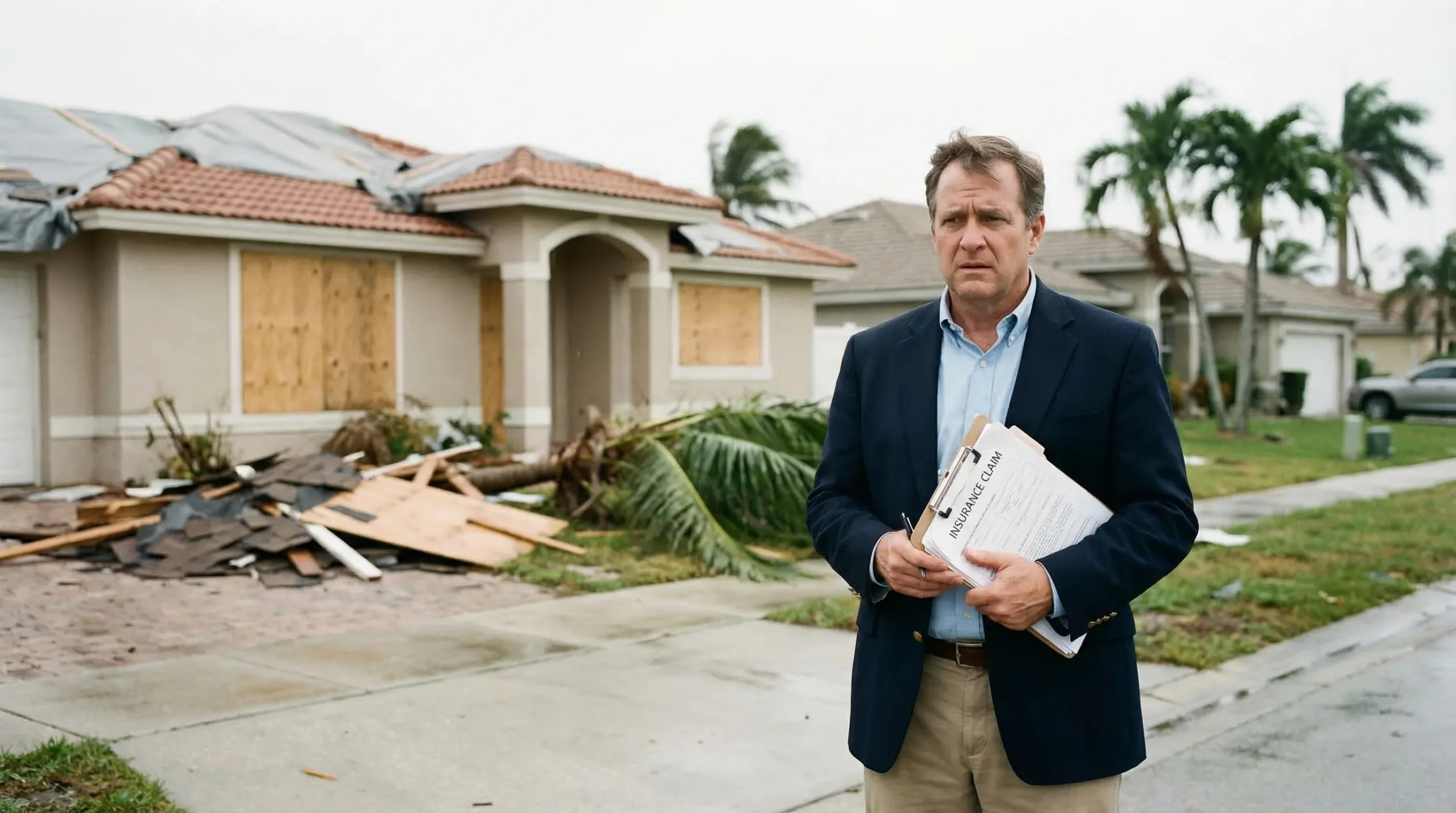
How the Orlando Insurance Crisis Hits Fix and Flip Investors Hard
The Orlando insurance crisis fix and flip investors are facing has created a perfect storm of higher costs, longer delays, and reduced profit margins. I’ve seen countless investors struggle with elevated premiums that can add thousands to their project budgets.
After years of lending and investing in Florida real estate, I’ve watched how insurance complications can derail otherwise solid deals. The good news is that understanding these challenges and adapting your strategy can keep you profitable even in this tough environment. Let me share what SEP Capital is seeing on the ground and how I’m helping investors navigate these waters.
Key Takeaways
- Orlando-area insurance premiums average $3,371-$3,422 annually, still 2-2.5 times the national average
- Premium growth has stabilized to 1.5% in 2025 compared to 17.3% in previous years
- Underwriting delays now take weeks instead of days, affecting project timelines
- Over 30 insurance companies have left Florida, creating limited carrier options
- Claims delays and denials create cash flow risks for active investors
In This Article
- Current Insurance Costs Eating Into Profits
- What’s Really Driving These Crazy Costs
- Limited Options Creating Bottlenecks
- Recent Changes and Market Recovery
- How Smart Investors Are Adapting
- Lending Solutions That Actually Work
Current Insurance Costs Eating Into Profits
The numbers don’t lie. Florida home insurance averaged $3,747 in August 2025, but Orlando-area investors are catching a relative break. Orange County averages $3,422, Seminole hits $3,371, and Hillsborough comes in at $3,369.
Here’s what this means for your typical flip project. If you’re buying a $200,000 property for renovation, you’re looking at roughly $3,400 in annual insurance costs. Most flips I finance carry insurance for 6-8 months during the renovation and marketing period.
That translates to $1,700-$2,300 per project just in insurance costs. Compare that to the national average of roughly $2,200 annually, and you can see why Florida insurance crisis fix and flip investors are feeling the squeeze.
I recently had a client in Winter Park who budgeted $1,500 for insurance on a flip project. The actual cost came in at $2,800. That’s $1,300 straight off his profit margin – money that could have gone toward better finishes or his next deal down payment.

What’s Really Driving These Crazy Costs
The Florida insurance crisis fix and flip investors face isn’t random bad luck. Hurricane losses topped $15 billion in 2024 alone, and insurers are paying 40-60% more for reinsurance coverage compared to pre-2020 levels.
But hurricanes aren’t the only culprit. Florida leads the nation in insurance lawsuits, which adds an estimated $1,000-$1,500 to every annual premium. As someone who’s been lending since 2013, I’ve seen how litigation costs get passed down to every property owner.
The claims process has become a nightmare too. Florida ranks first nationally with 40.3% of property claims closed with no payment, and 32.8% of claims face delays over 60 days.
For fix-and-flip operations, this creates MASSIVE cash flow risks. If you have storm damage during renovation and your claim gets denied or delayed, you’re carrying extra holding costs while fighting the insurance company. I’ve seen projects go from profitable to break-even because of insurance claim delays.
The Fraud Factor
Insurance fraud has exploded in Florida, particularly roof replacement scams. Contractors going door-to-door after storms, inflating claims, and disappearing with advance payments. This drives up costs for everyone, including legitimate investors trying to protect their properties.
The result? Insurance companies scrutinize every claim more heavily, creating longer approval processes and more documentation requirements for investors.
Limited Options Creating Bottlenecks
Here’s where the Florida insurance crisis fix and flip investors experience gets really challenging. More than 30 companies became insolvent or left Florida during this crisis. That means fewer choices, longer underwriting processes, and higher rates across the board.
What used to take days now takes weeks. I recently had a client whose insurance approval delayed his closing by three weeks. That’s three weeks of additional interest on his hard money loan and three weeks of lost opportunity.
Many investors end up with Citizens Property Insurance Corp., Florida’s insurer of last resort. Citizens’ rates are capped, which sounds good, but their growing exposure raises solvency concerns.
Plus, Citizens often has the longest underwriting times.
Geographic Variations
Not all Florida markets face equal challenges. Coastal properties in Miami-Dade and Broward see the highest premiums and fewest carrier options. Orlando and Central Florida offer more stability, but you’re still dealing with limited choices compared to pre-crisis levels.
I guide investors toward inland properties partly because insurance remains more manageable. It’s not cheap, but it’s workable compared to beachfront markets where insurance can exceed $10,000 annually.

Recent Changes and Market Recovery
There’s cautious optimism in the market. The 1.5% premium increase through August 2025 represents significant stabilization compared to the 17.3% increases we saw in 2022-2023. Legislative reforms including HB 7065, SB 76, and SB 2D have started curbing abusive litigation.
Governor DeSantis announced rate reductions across Florida, with 59 rate filings for reductions and 87 for zero rate increases filed with regulators. That’s encouraging news for Florida insurance crisis fix and flip investors looking ahead.
But I’m cautiously optimistic, not celebrating yet. Four of the new insurers entering since 2022 either appear to be restructured from previously insolvent companies or have ties to firms that faced financial trouble. We need truly stable, well-capitalized carriers to enter the market.
What This Means for 2026
The stabilization trend should continue if Florida avoids major hurricane damage in 2025 and 2026. Reinsurance costs might start declining, which would directly benefit property owners. However, premiums will likely remain 2-2.5 times the national average through 2026 at minimum.
For investors, this means planning for elevated insurance costs as a permanent feature rather than a temporary obstacle. Build these costs into your acquisition criteria and exit strategies.
How Smart Investors Are Adapting
The most successful Florida insurance crisis fix and flip investors I work with have adapted their strategies rather than fighting the market. For comprehensive guidance on optimizing your investment strategy, check out our insights on fix and flip financing strategies. Here’s what’s working:
Budget Conservatively
I recommend budgeting $4,000-$4,500 annually for insurance on Tampa Bay area properties, even though current averages run lower. This builds in cushion for potential increases and carrier switches. Better to be pleasantly surprised than scrambling for extra funds.
One client budgets insurance at 2% of acquisition cost as a rule of thumb. On a $200,000 purchase, that’s $4,000 for insurance – usually enough to cover the full project timeline with room for delays. If you’re looking to optimize your investment strategy with proper financing that accounts for these insurance costs, apply now for a no-cost, no-obligation loan quote.
Start Insurance Early
Begin the insurance process immediately after going under contract. Don’t wait for closing. The underwriting delays can push back your closing date, costing you opportunity and financing fees. I’ve seen closings delayed 2-4 weeks due to insurance approval timing.
Get multiple quotes from different carriers. Even if one company is $500 more annually, they might approve faster and save you weeks of holding costs.
Consider Geographic Flexibility
Focus on inland markets like Orlando, Kissimmee, and Winter Park rather than coastal areas. The insurance savings alone can DRAMATICALLY improve your profit margins. A property that costs $8,000 annually to insure in Fort Lauderdale might cost $3,500 in Tampa or $3,400 in Orlando.
I guide investors toward neighborhoods with good drainage and minimal flood risk. Even within Tampa, certain areas carry higher premiums due to storm history or flood plain proximity.
Build Relationships with Agents
Having a great insurance agent who understands investor needs is CRITICAL. They know which carriers move fastest, which ones prefer investment properties, and how to structure policies for optimal coverage and cost.
My most successful clients work with agents who specialize in investor insurance rather than homeowner-focused agencies. The service level and expertise difference is night and day.
Lending Solutions That Actually Work
The Florida insurance crisis fix and flip investors experience affects financing too. Higher insurance costs mean tighter profit margins, which makes loan terms even more important. At SEP Capital, I’ve adapted my underwriting to account for these realities.
I factor realistic insurance costs into my loan-to-cost calculations rather than using outdated assumptions. If a project needs $3,500 for annual insurance instead of $2,000, that goes into the budget analysis from day one.
My cross-collateral loans help investors reduce down payment requirements, freeing up capital for the higher insurance and carrying costs. Instead of putting 20-25% down on every deal, you might leverage existing properties to minimize cash out of pocket.
“After borrowing hard money extensively before becoming a lender, I understand how insurance complications can derail cash flow projections. We structure our loans with realistic holding periods and cost assumptions, not best-case scenarios.”
I recently helped a Tampa investor secure a cross-collateral loan using his primary residence and rental property as collateral. This eliminated the down payment requirement on his flip project, giving him extra capital to handle the higher insurance costs and potential delays.
Why Speed Still Matters
Even with insurance delays, my ability to close in 5-7 days once insurance is secured gives investors a competitive edge. While competitors wait weeks for bank approvals, you can move quickly when the right opportunity appears.
I’m currently managing just under $20 million in loans outstanding, with a target of $150 million within 5-10 years. My low default rate comes from declining deals that don’t make sense, even when it means turning down revenue. I couldn’t in good conscience let somebody get taken advantage of by a bad deal – especially in this insurance environment.
Ready to discuss how we can help you navigate the Florida insurance crisis fix and flip investors are facing? Apply now for a no-cost, no-obligation loan quote. I’ll structure financing that accounts for current market realities while keeping your projects profitable.
Looking Ahead
The insurance landscape will likely remain challenging through 2026, but it’s manageable with proper planning and realistic budgeting. Focus on markets like Orlando where premiums are stabilizing, work with experienced insurance agents, and partner with lenders who understand current market conditions.
The investors who adapt their strategies now will be positioned to profit when conditions improve. Those who ignore the insurance reality or hope it goes away quickly will struggle with unexpected costs and project delays.






Stay In Touch