
What You Need to Know About Bridge Loans in Orlando
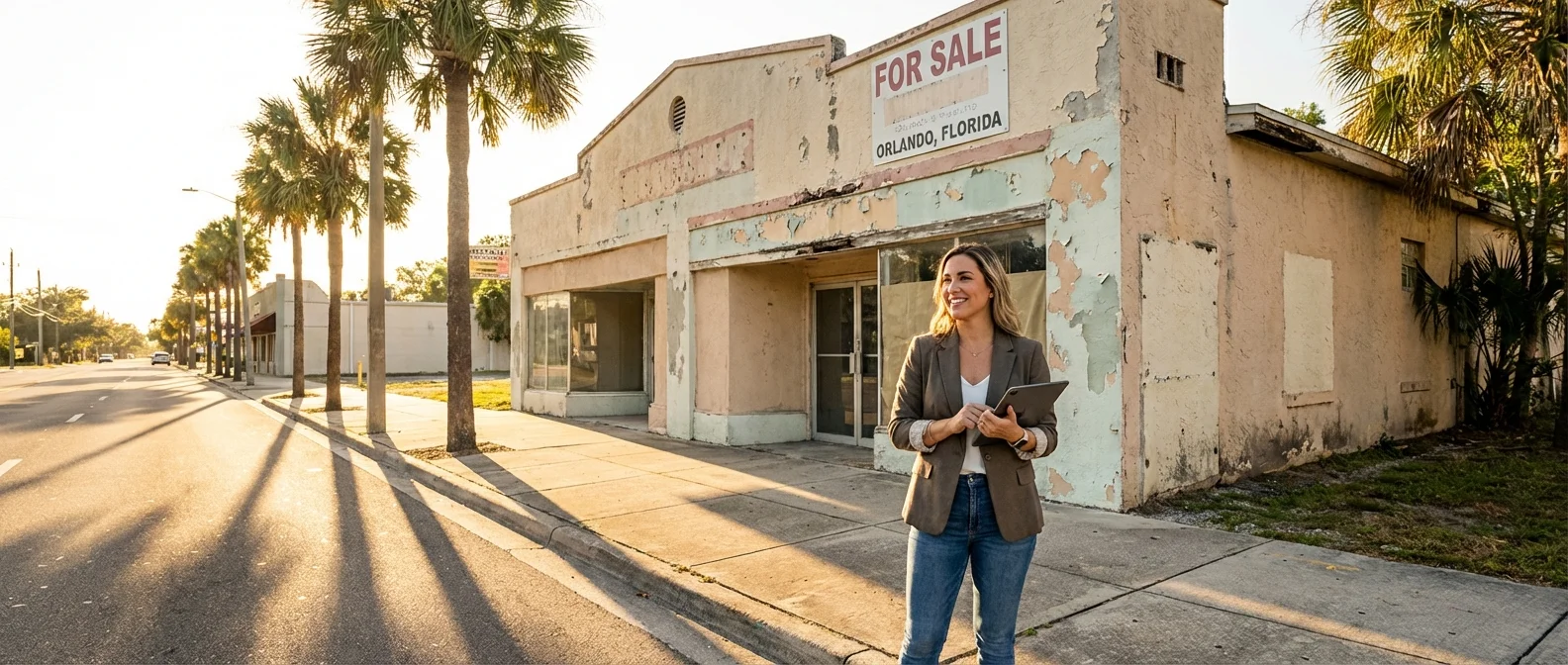
You found a distressed duplex in Parramore listed at $285,000. The ARV pencils out north of $420,000. Your contractor is ready. But your bank wants 45 days, two years of tax returns, and a credit score conversation you would rather skip. By day 12, another buyer closes with cash. That deal is gone. This is the exact scenario bridge loans were built to solve, and it happens every day. It’s time to find yourself an Orlando hard money lender, but first there are a couple things you should know.
I borrowed hard money extensively before becoming a lender myself, so I understand both sides of the closing table. Bridge loans are my bread and butter. If there is equity in the deal and a clear exit strategy, I can probably get it funded.
What This Article Covers
- What Is a Bridge Loan and How Does It Work?
- Why Orlando Investors Need Bridge Loans
- When Banks Say No: Why Traditional Lenders Fall Short
- Types of Bridge Loans Available in Orlando
- What Bridge Loans Cost in Orlando (2026 Rates and Terms)
- How to Qualify for a Bridge Loan with Any Credit Score
- Risks and How to Manage Them
- Frequently Asked Questions
- The Bottom Line
What Is a Bridge Loan and How Does It Work?
The Basic Structure
A bridge loan is short-term financing secured by real estate. The loan “bridges” the gap between where you are right now and where you need to be, whether that means closing on a new property before selling an existing one, funding a renovation, or pulling cash out of equity for your next move. Terms typically run 6 to 12 months, sometimes stretching to 18 or 24 months depending on the deal.
Payments are usually interest-only during the loan term. You are not paying down principal each month, which keeps your monthly carrying costs lower while you execute your business plan. At the end of the term you either refinance into a long-term loan, sell the property, or pay off the balance from another source.
Bridge Loans vs. Traditional Bank Loans
Banks care about you. Your W-2 income, your credit score, your debt-to-income ratio, your employment history going back two years. A bridge lender like me cares about the property. What is it worth today? What will it be worth after improvements? Is there enough equity to protect the investment?
That is the fundamental difference. A bank underwrites the borrower. An asset-based lender underwrites the deal. This distinction matters ENORMOUSLY when speed and flexibility determine whether you win or lose a deal.
Why Orlando Investors Need Bridge Loans
Current Market Conditions
Orlando’s real estate market heading into 2026 is a mixed bag that creates real opportunity for investors who can move fast. The Orlando Regional Realtor Association reported homes spending an average of 81 days on market in January 2026, up from 58 days in 2024. Inventory has climbed to roughly 11,700 listings with supply hovering between 4 and 7 months depending on the price bracket.
Median home prices are holding in the $370,000 to $400,000 range, with some softening in certain neighborhoods. That softening is exactly where opportunity lives for fix-and-flip and BRRRR investors. Sellers who have been sitting for 60 to 80 days get motivated. Price reductions start appearing. Deals that were impossible 18 months ago are landing on the MLS every week.
Meanwhile, the Orlando metro area has added over 267,000 residents since the 2020 census, making it the fastest-growing large metro in the country. Population growth drives housing demand. That demand supports your exit strategy whether you plan to sell or rent. Median rents in the Orlando metro sit around $2,000 per month, which makes the BRRRR math work on a lot of these deals.
Common Scenarios Where Speed Wins
A probate property hits the market at 70 cents on the dollar but the estate executor wants to close in two weeks. An auction property requires proof of funds within 48 hours. A landlord needs cash out of an existing rental to fund a down payment on a 12-unit apartment building before another buyer scoops it up. A fix-and-flip investor finished their rehab and needs a bridge to carry the property until it sells.
None of these situations work with a 45-day bank timeline. Every single one works with a 7 to 14 day bridge loan close.
When Banks Say No: Why Traditional Lenders Fall Short
The Credit and Income Trap
Here is what drives me crazy about traditional banking. A bank would rather write a loan for somebody with a 650 credit score putting 3% down on an owner-occupied home than fund a deal where you bring $500,000 in equity against a million-dollar property. It is silly to me sometimes. They will turn you away because your credit score dipped below their threshold, or because your self-employment income does not fit neatly into their underwriting box.
You could have $2 million in real estate equity and a proven track record of profitable deals, but if your tax returns show a loss because your accountant is good at their job, the bank says no. I have seen investors with 20 paid-off properties get declined for a $200,000 loan because their DTI ratio was too high on paper.
Speed vs. Process
Even when a bank says yes, the timeline kills deals. Appraisal ordering takes a week. Underwriting takes two to three weeks. Conditions come back. More documents get requested. Another review. By the time you get a clear to close, the seller has moved on.
A bridge loan application can be reviewed in hours. If the equity is there and the exit strategy makes sense, you could have a term sheet the same day and close within one to two weeks. That is the difference between getting the deal and reading about someone else getting the deal.
Types of Bridge Loans Available in Orlando
Residential Bridge Loans
These cover single-family homes, duplexes, triplexes, and four-unit properties. The most common use cases in Orlando are fix-and-flip loans and BRRRR financing. You buy a distressed property, renovate it, then either sell for a profit or refinance into a DSCR loan and hold it as a rental. I fund these all day long.
Residential bridge loans in Orlando typically range from $75,000 to $2 million, though I have done smaller and larger depending on the specifics. The property itself is the primary collateral, and the loan amount is based on its current or after-repair value.
Commercial Bridge Loans
Multifamily properties with five or more units, mixed-use buildings, retail space, office, warehouse. Commercial bridge loans solve the same timing and qualification problems as residential ones, just at a larger scale. Orlando’s commercial market is active, particularly in the multifamily space where population growth is driving demand for apartments.
Commercial bridge loans could range from $500,000 into the tens of millions. These deals often involve more complex structures and longer due diligence periods, but they still close SIGNIFICANTLY faster than a commercial bank loan, which could easily take 90 to 120 days.
Cross-Collateral Bridge Loans
This is a tool a lot of investors overlook. If you own a free-and-clear rental property worth $400,000 and need $250,000 to close on a new deal, you can use your existing property as additional collateral (cross-collateralize) to get the loan done. This works especially well when the new acquisition does not have enough equity on its own to meet LTV requirements.
Cross-collateral structures give you leverage without selling assets. You keep your cash-flowing rental and use its equity to grow your portfolio. I see this strategy used frequently by experienced Orlando investors who have built up equity over time.

What Bridge Loans Cost in Orlando (2026 Rates and Terms)
Transparency matters to me. Too many lenders bury their fee structures. Here is what you should actually expect on a bridge loan in the Orlando market right now.
Interest Rates
According to Private Lender Link industry data, hard money and bridge loan rates in Central Florida averaged around 10.35% to 10.55% through late 2025 and into early 2026. That is the going rate for borrowers with decent deal fundamentals and some experience. If your credit is below 600 or the deal has higher risk factors, expect rates in the 11% to 13% range. Rates have actually come down slightly over the past year as more lenders entered the Florida market and competition increased.
Origination Points and Fees
Origination fees on bridge loans typically run 1.5 to 3 points (1.5% to 3% of the loan amount). On a $300,000 loan, that is $4,500 to $9,000 paid at closing. Some lenders also charge processing fees, underwriting fees, or document preparation fees on top of points. Always ask for the full fee breakdown before committing. I try to keep things clean and transparent with straightforward point structures.
Loan-to-Value Ratios
Most bridge lenders in Orlando work within a 65% to 75% loan-to-value ratio based on the property’s current appraised value or the after-repair value (ARV). Some lenders go up to 80% or even 85% LTV for experienced investors with strong track records. Higher LTV typically means higher rates and points, which makes sense because the lender is taking on more risk.
Sample Deal Breakdown
Here is a real-world example of how a bridge loan might look on an Orlando fix-and-flip deal:
- Purchase price: $280,000 (distressed 3/2 in Pine Hills)
- Estimated ARV: $410,000
- Rehab budget: $65,000
- Bridge loan amount: $280,000 (70% of ARV, covers purchase and partial rehab)
- Interest rate: 10.5%
- Origination: 2 points ($5,600)
- Monthly interest-only payment: $2,450
- Loan term: 12 months
- Total interest cost if held 6 months: $14,700
- Total borrowing cost (interest + points): $20,300
- Estimated profit after all costs: $55,000 to $65,000
The numbers work because you got into the deal fast, executed the rehab, and exited before carrying costs ate into your margin. That is the whole point of a bridge loan. Speed in, speed out, profit in between.
How to Qualify for a Bridge Loan with Any Credit Score
What Asset-Based Lenders Actually Look At
I am an asset-based lender. That means I care about the asset first and the borrower second. Here is what actually moves the needle on whether your deal gets approved:
- Property value and equity position. Is there enough collateral to protect the loan? If you have a building worth a million and you need $500,000, and you have a heartbeat, I am going to do that loan.
- Exit strategy. How are you paying this back? Sale, refinance, or other capital source. Your exit needs to be realistic and clearly defined.
- Deal economics. Does the deal make financial sense? Are the ARV comps solid? Is the rehab budget reasonable for the scope of work?
- Experience. Not required, but it helps. First-time flippers can absolutely get bridge loans, but having a track record might get you better terms.
Notice what is not on that list. Credit score minimums. W-2 income verification. Two years of tax returns. Debt-to-income ratio calculations. I make loans for people that are, to put it plainly, un-bankable by traditional standards. That does not mean the deals are bad. It means banks are rigid.
Documents You Will Need
Even though bridge loan underwriting is lighter than bank underwriting, you still need to bring some documentation to the table:
- Government-issued ID
- Property address and purchase contract (or current deed if refinancing)
- Scope of work and rehab budget (for renovation loans)
- Proof of funds for down payment and reserves
- Entity documents if borrowing through an LLC
- Insurance binder for the property
- Title report or preliminary title commitment
That is it. No pay stubs. No employer verification letters. No 60 days of bank statements with every deposit explained. If you have ever been through a traditional mortgage process, you know how refreshing that sounds.
Risks and How to Manage Them
Higher Carrying Costs
Bridge loans cost more than conventional mortgages. A 10.5% interest rate with 2 points is obviously more expensive than a 7% bank loan with no points. That is the trade-off for speed, flexibility, and access. The key is to factor these costs into your deal analysis BEFORE you make an offer, not after.
Run your numbers conservatively. Assume the project takes two months longer than planned. Add a 10% to 15% contingency to your rehab budget. If the deal still works with those cushions, it is probably a good deal. If it only works if everything goes perfectly, you are setting yourself up for a problem.
Exit Strategy Is Everything
The single biggest risk with a bridge loan is not having a clear, executable exit strategy. If your plan is to sell a flip but the market softens and the property sits for six months, you are paying $2,000 to $3,000 per month in interest while you wait. If your plan is to refinance into a DSCR loan but the property does not appraise high enough, you could be stuck.
Mitigate this by having a backup plan. If Plan A is to sell, Plan B might be to rent the property and refinance. If Plan A is to refinance, Plan B might be to sell. Talk to your lender about extension options upfront. Most bridge lenders, myself included, would rather extend a performing loan than foreclose on a property. Communication goes a long way.
Frequently Asked Questions
How fast can a bridge loan close in Orlando?
Most bridge loans close in 7 to 14 business days. I have closed deals faster when the borrower had all their documentation ready and title was clean. Compare that to 30 to 60 days (or more) for a traditional bank loan.
Can I get a bridge loan with bad credit?
Yes. Asset-based lenders focus on the property’s value and your equity position, not your credit score. Borrowers with credit scores below 600 regularly get bridge loans. Your rate might be slightly higher, typically in the 11% to 13% range, but the deal can still get done.
What is the minimum down payment for a bridge loan?
Most lenders require 25% to 35% equity in the deal, meaning you need skin in the game. On a $300,000 purchase with a 70% LTV loan, you would bring $90,000 to closing plus any fees and reserves.
Are bridge loans only for investors?
Primarily, yes. Bridge loans are designed for investment properties and business-purpose transactions. If you are buying a primary residence, a traditional mortgage is usually the better path. However, some borrowers use bridge loans to buy a new home before selling their current one.
What happens if I cannot pay off the bridge loan by the maturity date?
Talk to your lender before the maturity date. Many bridge lenders offer extensions, typically for an additional fee of 0.5 to 1 point. The worst thing you can do is go silent. Lenders want to work with you, not against you.
Do bridge loans require an appraisal?
Usually yes, though some lenders may accept a BPO (broker price opinion) or desktop valuation for lower loan amounts. An appraisal protects both you and the lender by establishing a credible property value.
If you have questions about a specific deal, apply for a no-cost, no-obligation loan quote and let me take a look at the numbers.
The Bottom Line
Orlando is one of the best real estate investment markets in the country right now. Population growth is driving demand. Inventory is rising and giving investors more to choose from. Days on market are stretching, which means motivated sellers and better negotiating positions. But none of that matters if you cannot close when the opportunity appears.
Bridge loans exist to solve that problem. They are not the cheapest capital available, but they might be the most useful capital when a bank says no or takes too long. Whether you are flipping a house in College Park, buying a small apartment building in Kissimmee, or pulling cash out of a rental in Winter Park to fund your next acquisition, a bridge loan could be the tool that gets you from where you are to where you want to be.
I have been on both sides of this business. I know what it feels like to need capital fast and not have a clear path to it. That is exactly why I built SEP Capital the way I did. If you have a deal that makes sense and you need a lender who actually picks up the phone, apply for a no-cost, no-obligation loan quote today.
The information provided here is for educational purposes only and does not constitute financial or investment advice. Always perform your own due diligence and consult with qualified professionals before making investment decisions.







Stay In Touch