

Tampa Bay DSCR Loan Requirements for Real Estate Investors: What You Need to Qualify in 2025
After lending on over 4,000 loans in the Tampa Bay market, I’ve seen firsthand how DSCR financing can transform an investor’s ability to build wealth through real estate. The property’s cash flow becomes your qualification ticket, not your personal tax returns or W-2s. But here’s what many investors miss: understanding the specific requirements for our Tampa Bay market could mean the difference between approval and denial.
The Tampa Bay real estate market presents unique opportunities and challenges. Strong rental demand from our growing population meets head-on with some of the highest insurance costs in the nation. If you’re looking to leverage DSCR loans to build your portfolio here, you need to understand exactly what Tampa hard money lenders are looking for and how to position your deal for success.
Quick Navigation
- Core DSCR Loan Requirements
- Calculating Your DSCR in Tampa Bay
- Qualification Standards and Credit Requirements
- Eligible Property Types and Vesting Options
- Tampa Bay Specific Challenges
- Strategies to Improve Your Approval Odds
- Comparing DSCR Lenders in Florida
- Your Next Steps
Core DSCR Loan Requirements
DSCR loans flip traditional lending on its head. Instead of diving into your personal finances, we’re looking at one primary metric: can this property pay for itself? The Debt Service Coverage Ratio measures how many times your rental income can cover your total monthly housing payment.
Most lenders in our market require a minimum DSCR between 1.0 and 1.25. A ratio of 1.0 means the property breaks even – your rental income exactly covers your mortgage, taxes, insurance, and any HOA fees. A ratio of 1.25 means you’re generating 25% more income than needed to cover these expenses.
But here’s what’s changing the game: more lenders now offer programs for properties with DSCRs below 1.0, sometimes as low as 0.75. If you have strong compensating factors like excellent credit or a larger down payment, you might still qualify even with negative cash flow. This flexibility can be CRUCIAL in high-cost areas like downtown St. Petersburg or Clearwater Beach.
Beyond the DSCR itself, you’ll typically need:
- Credit score of 620-680 minimum (though 720+ gets you the best terms)
- 20-25% down payment for purchases
- 3-6 months of PITIA payments in reserves
- Property insurance quote (this is critical in Florida)
Ready to see if your investment property qualifies? Apply now for a no-obligation loan quote and we’ll run your numbers within 24 hours.

Calculating Your DSCR in Tampa Bay
The DSCR formula looks simple: Gross Monthly Rent ÷ Total Monthly Housing Payment (PITIA). But in Tampa Bay, getting these numbers right requires local expertise.
Let me walk you through a real example from a recent deal in Seminole Heights:
A 3-bedroom house purchased for $410,000 with 20% down ($82,000), leaving a loan amount of $328,000. At current DSCR rates around 7.5%, the monthly principal and interest comes to roughly $2,293.
Now here’s where Tampa Bay gets tricky. Property taxes in Hillsborough County run about 0.88% of your purchase price annually. On this property, that’s $301 monthly. Insurance? In our current market, you’re looking at $375-500 monthly for a property this size – and that’s if you’re not in a flood zone.
With rental income at $2,700 (typical for a 3-bedroom in Seminole Heights), here’s the math:
- Monthly Rent: $2,700
- Total PITIA: $2,969 (P&I: $2,293 + Taxes: $301 + Insurance: $375 + HOA: $0)
- DSCR: $2,700 ÷ $2,969 = 0.91
This property would need either a specialized below-1.0 DSCR program or some adjustments to make it work. Maybe negotiating the purchase price down or finding more competitive insurance could push it over the line.
Qualification Standards and Credit Requirements
Your credit score still matters with DSCR loans, even though we’re not verifying income. Think of it this way: the property shows it can pay the mortgage, but your credit shows you’ll actually make those payments.
Credit score tiers typically break down like this:
- 620-640: You’ll qualify with some lenders, but expect higher rates and larger down payment requirements
- 680-720: This is the sweet spot for most programs with standard terms
- 720+: You’ll access the best rates and potentially qualify for 80-85% financing
First-time investors can absolutely qualify for DSCR loans. You might face slightly tighter requirements – perhaps a 25% down payment instead of 20%, or a minimum 1.25 DSCR instead of 1.0. But if your deal fundamentals are strong, your lack of experience won’t stop you.
Cash reserves are another critical requirement. Lenders want to see you can weather a few months of vacancy or unexpected repairs. The standard is 3-6 months of PITIA payments in liquid accounts. For our Seminole Heights example, that would mean having $8,900-17,800 in reserves beyond your down payment and closing costs.
Eligible Property Types and Vesting Options
DSCR loans cover a wide range of investment properties, which gives you flexibility in building your portfolio. You can finance single-family homes, townhomes, condos (including non-warrantable ones that conventional lenders won’t touch), and 2-4 unit properties. Some lenders even go up to 8 units.
Short-term rentals are explicitly allowed by most DSCR lenders – a huge advantage in tourist-heavy areas like Clearwater Beach or downtown Tampa. For STR properties, lenders typically accept income projections from services like AirDNA or market rent analyses from appraisers.
One of the most valuable features of DSCR loans is the ability to vest in an LLC. This isn’t just paperwork – it’s asset protection. When you hold investment properties in your personal name (as conventional loans require), you’re exposing yourself to personal liability. With DSCR loans, you can properly structure your business with each property in its own LLC if desired.
We’re seeing more investors use this structure to build true real estate businesses, not just accumulate a few rentals. You can scale beyond the 10-property limit that conventional financing imposes. I’ve worked with investors who own 20, 30, even 50+ properties, all properly structured and financed with DSCR loans.
Tampa Bay Specific Challenges
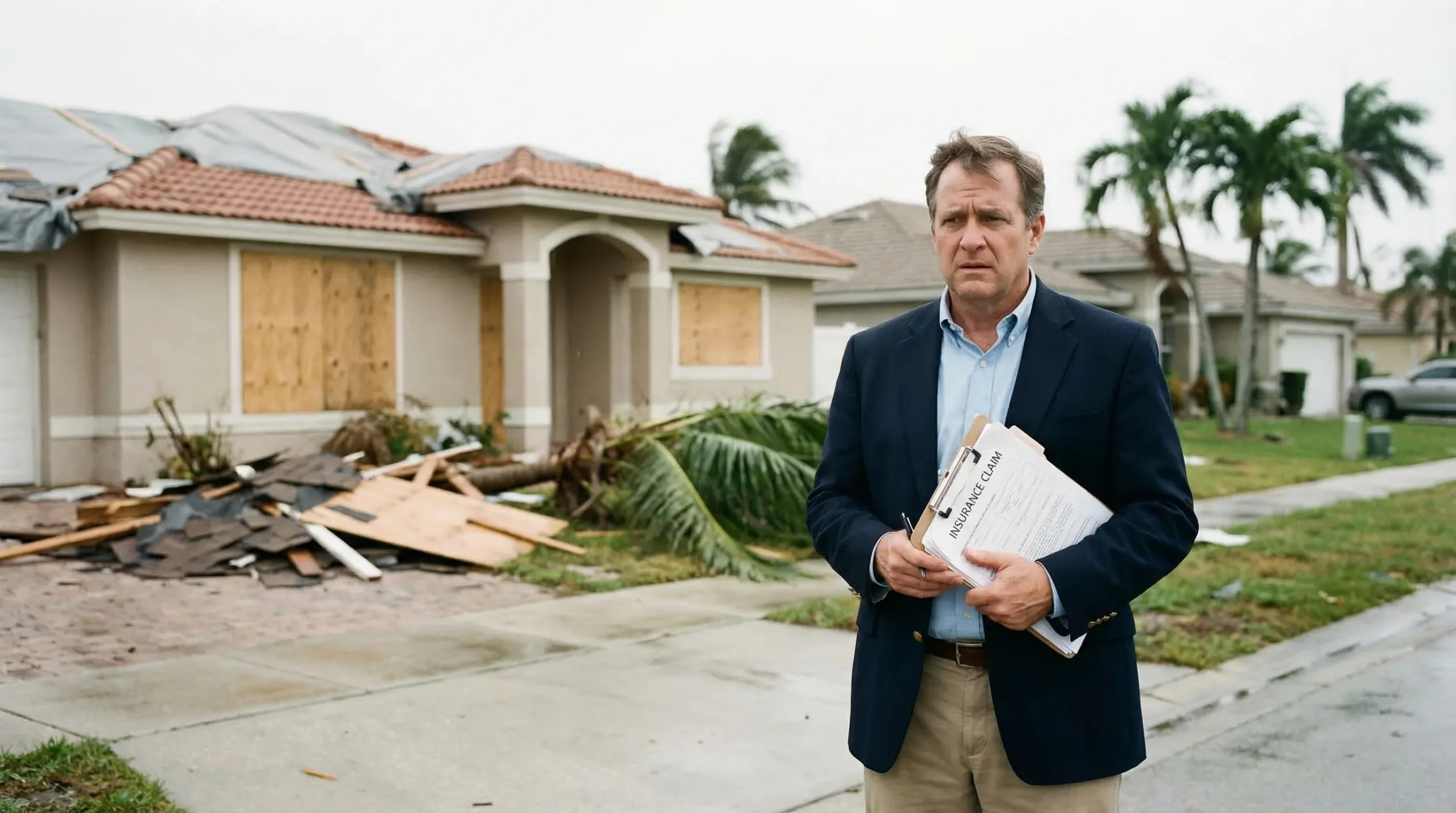
Let me be direct: the biggest threat to your DSCR calculation in Tampa Bay isn’t the purchase price or interest rates – it’s insurance. Annual premiums for landlord insurance have doubled or even tripled in recent years. I’m seeing quotes ranging from $2,500 to over $7,000 annually for typical investment properties.
Location matters tremendously. A property in a flood zone could require an additional $3,000-5,000 in flood insurance annually. That single factor can destroy your DSCR. Before making an offer, get an insurance quote. Actually, get several quotes. This number will make or break your deal.
Property taxes present another challenge. While Hillsborough County averages 0.88% and Pinellas County runs about 0.76%, the actual millage rate varies by specific location. A property in downtown Tampa could have significantly higher taxes than one in unincorporated Hillsborough County.
HOA fees have also spiked, particularly for condos and townhomes. What used to be $200-300 monthly has jumped to $600-1,000+ in many communities. These associations are facing the same insurance crisis, plus new reserve requirements. Always review the HOA’s financial statements and budget before purchasing.

Strategies to Improve Your Approval Odds
After thousands of deals, I’ve learned what separates approved loans from denials. Here’s how to position yourself for success:
Target properties with inherent advantages. Newer construction (less than 10 years old) typically means lower insurance costs. Properties with documented wind mitigation features – impact windows, reinforced roofs, hurricane shutters – can cut insurance premiums by 20-40%. Stay out of flood zones unless the rental income truly justifies the extra insurance cost.
Consider interest-only payment options for the first few years. This can improve your DSCR by 15-20% during the interest-only period. Yes, you’ll eventually need to handle the fully amortized payment, but this strategy can help you qualify now while building equity and potentially benefiting from rent increases.
Shop your loan with multiple lenders. Requirements vary significantly. One lender might require a 1.25 DSCR with 680 credit score, while another approves 0.75 DSCR with 640 credit but needs 30% down. A good mortgage broker can navigate these differences and find the right fit for your situation.
If your DSCR is borderline, strengthen other aspects of your application. Increase your down payment from 20% to 25%. Build up 6-12 months of reserves instead of the minimum 3 months. These compensating factors can push a marginal deal over the finish line.
Comparing DSCR Lenders in Florida
The DSCR lending landscape in Florida is competitive, with dozens of lenders vying for your business. National players like Griffin Funding and Newfi Lending offer streamlined online processes and competitive rates.
Regional specialists often provide more flexibility. Companies like Bennett Capital Partners and local brokers understand Florida’s unique market conditions. They might approve deals that national lenders would reject.
Minimum credit scores range from 620 to 680. Maximum LTVs typically cap at 75-80%, though some lenders go to 85% for exceptional borrowers. Minimum DSCRs vary widely – from strict 1.25 requirements to flexible programs accepting 0.75 or even no-ratio loans.
Interest rates for DSCR loans currently run 1-3% higher than conventional mortgages. Expect rates in the 7-9% range, depending on your credit, down payment, and the property’s DSCR. Yes, that’s higher than conventional financing, but remember – you’re buying accessibility and scalability, not just an interest rate.
Don’t forget about prepayment penalties. Most DSCR loans include them, typically for 2-5 years. This isn’t necessarily bad – it often means a lower rate. Just factor it into your long-term strategy.
Your Next Steps
The Tampa Bay market rewards investors who understand the numbers and move decisively. With population growth continuing and rental demand staying strong, the fundamentals support long-term investment success. But you need to approach it with eyes wide open about the costs.
Start by getting accurate numbers for your target area. Pull recent rental comps from the specific neighborhood, not just city-wide averages. Get real insurance quotes, not estimates. Check the actual property tax bill, not just the county average.
Build relationships with lenders before you need them. Understanding their specific requirements helps you structure better offers. When you find a good deal, you’ll move with confidence knowing you can close.
Consider working with an experienced mortgage broker who specializes in investment property financing. They’ll know which lenders are actively funding, who has the best terms for your situation, and how to position your application for approval.
Most importantly, don’t let the changing market PARALYZE you. Yes, insurance costs are high. Yes, interest rates aren’t what they were in 2021. But investors are still building wealth in this market. They’re just doing it with better information and more conservative underwriting.
The opportunities are there for investors who understand the requirements and structure their deals accordingly. Take the time to learn your market, build your team, and move forward with confidence.
Ready to explore your DSCR loan options for a Tampa Bay investment property? Apply here for a loan quote. Let’s analyze your deal and find the right financing solution for your investment goals.
Remember, in this business, the difference between success and struggle often comes down to having the right financing partner. Someone who understands not just loans, but the investment business itself. After 17 years of funding deals in Tampa Bay, we’ve seen what works and what doesn’t. Let’s make sure your next investment sets you up for long-term SUCCESS.




Stay In Touch